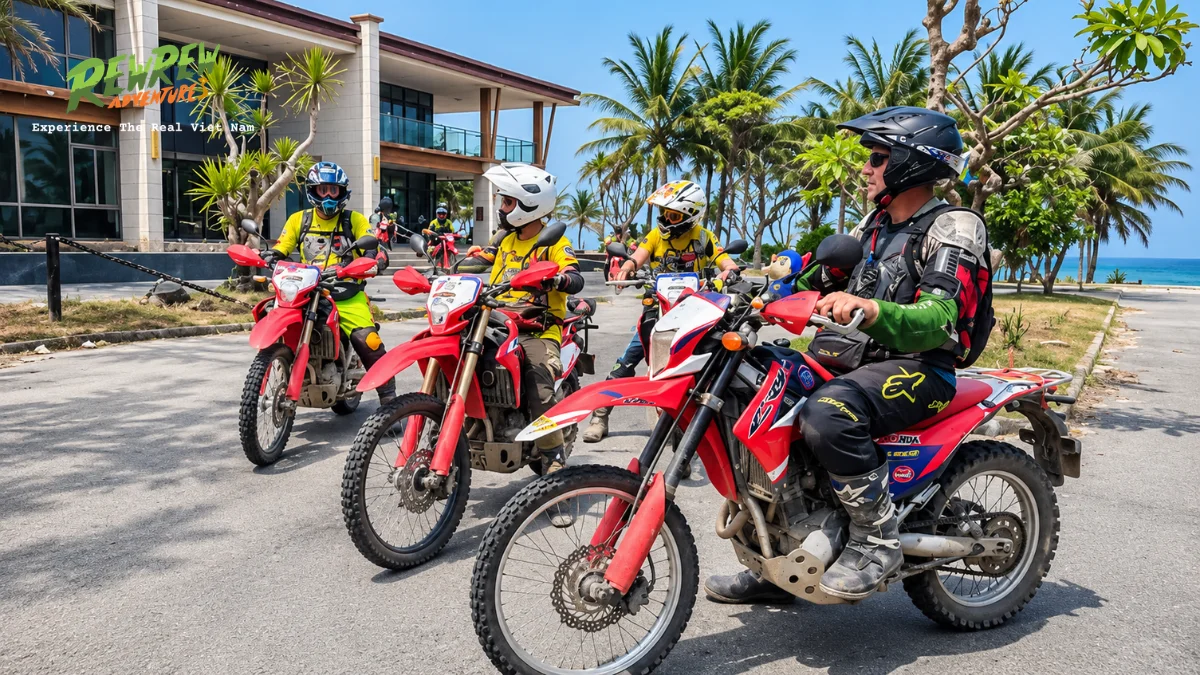
Preparing for an Easy Rider motorcycle journey across Vietnam is an exhilarating milestone that requires strategic luggage preparation. Having organized regional expeditions across the Central Highlands and coastal passes for over 18 years at Rew Rew Adventures, our founder Tuan Hiep and our veteran guiding team created this comprehensive packing guide.
This manual details luggage weight limits, modular clothing systems, technical footwear, electronics weatherproofing, and daily gear organization so travelers stay dry, comfortable, and prepared across hundreds of kilometers of scenic highway travel.
Quick Check: Easy Rider Packing Essentials
- Luggage Strategy: Bring one soft duffel or backpack (10 to 15 kg max) strapped to the rear rack; heavy suitcases stay safely stored at your hotel base.
- Clothing Principle: Pack modular quick-dry layers; highland passes require windbreakers and fleece, while coastal plains demand breathable sun protection.
- Weather Defense: A heavy-duty two-piece rain suit and waterproof dry sacks (10L to 20L) protect electronics from sudden tropical downpours.
- Daily Daypack: Keep passports, cash, power banks, sunscreen, and medications in a compact 10L chest pack or small personal daypack.
How should you pack for an “Easy Rider” trip in Vietnam?
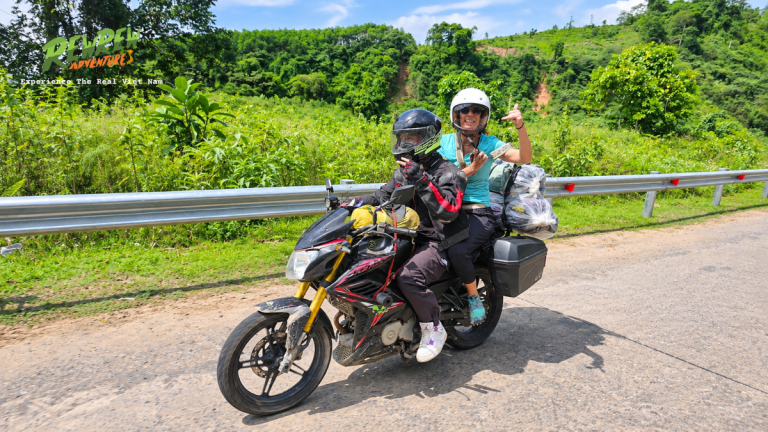
An “Easy Rider” trip in Vietnam (motorcycle pillion or self-riding tour, popular in regions like Ha Giang, Dalat, or the Ho Chi Minh Highway) requires a specific packing strategy. You need to balance protection from the elements, safety, and strict space limitations, as your gear will be strapped to the back of a motorcycle.
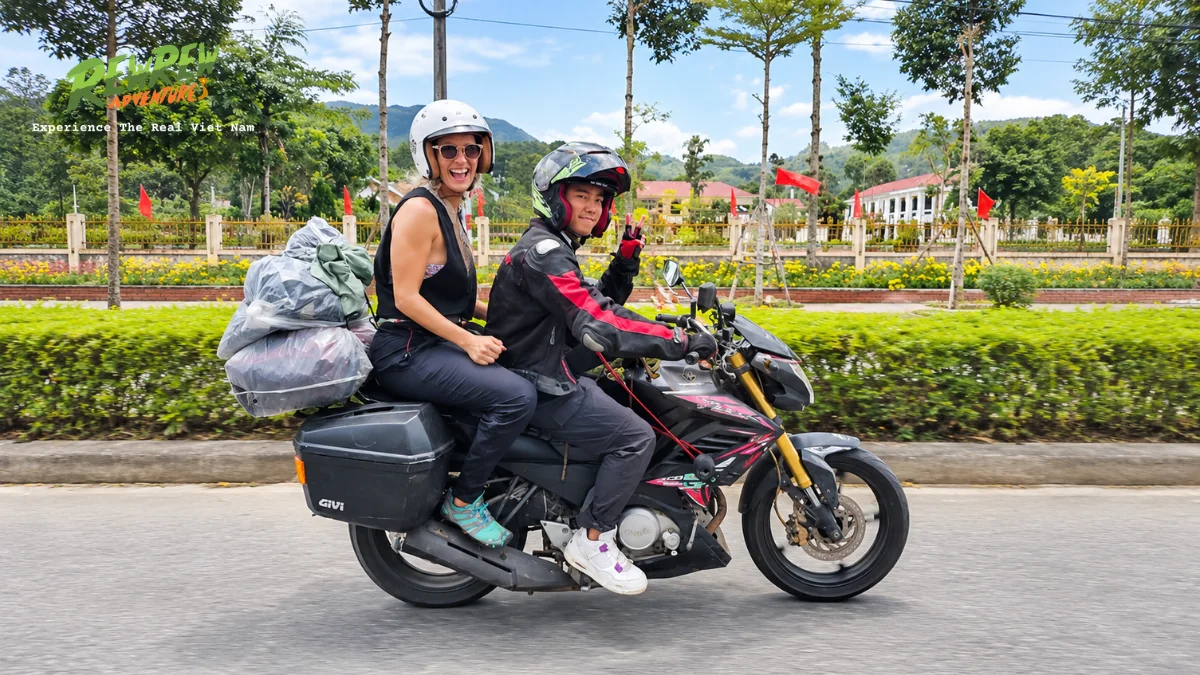
The standard luggage configuration consists of a two-bag system: one primary travel bag mounted horizontally on the rear rack and one compact daypack kept with you in the seating area.
Soft-sided travel backpacks, weather-resistant duffel bags, or internal-frame hiking packs between 45 and 65 liters are the gold standard for motorcycle touring. These soft packs compress neatly against the metal rack rails, offering multiple solid anchor points for bungee hooks.
| Baggage Category | Recommended Volume | Mounting Location | Optimal Gear Stored Inside |
|---|---|---|---|
| Primary Travel Backpack | 45 to 65 Liters (Under 18 kg) | Strapped horizontally on rear rack | Spare clothing, toiletries, extra shoes, charging hubs, rain gear |
| Personal Daypack | 12 to 18 Liters (Under 4 kg) | Worn on chest or rested on lap | Passport, wallet, phone, power bank, camera, sunscreen, medications |
| Internal Dry Bag Liner | 30 to 40 Liters | Inserted inside main backpack | Electronics, backup dry clothing, sensitive travel documents |
Mastering the layered clothing system for microclimatic shifts
A modular layered clothing system is necessary for Easy Rider tours because Vietnam topography produces dramatic temperature shifts between highland plateaus and tropical coastlines within hours.
Departing Da Lat at 1,500 meters elevation early in the morning frequently involves crisp pine air around 14 degrees Celsius and heavy dew. Descending the 29 kilometers of Khanh Le Pass toward Nha Trang or traversing Dai Ninh Pass toward Mui Ne exposes riders to coastal heat exceeding 33 degrees Celsius by midday.
Dressing in functional, interchangeable layers allows travelers to add or shed garments during regular roadside coffee stops without unfastening the main luggage rack.
Synthetic moisture-wicking textiles, lightweight merino wool, and breathable nylon weaves are significantly superior to heavy cotton or denim fleece combinations, which trap sweat and take days to dry in humid tropical air.
| Clothing Layer | Recommended Garment | Optimal Fabric | Thermal and Protection Purpose |
|---|---|---|---|
| Base Layer | Short-sleeve or long-sleeve crew shirt | Merino wool or synthetic polyester weave | Wicks perspiration, prevents sweat chill, dries in minutes |
| Mid Insulation | Lightweight fleece pullover or flannel shirt | Microfleece or technical waffle knit | Traps core body warmth during cold highland mountain mornings |
| Outer Wind Shell | Packable windbreaker or softshell jacket | DWR-treated ripstop nylon | Blocks highway wind chill and light drizzle on mountain summits |
| Riding Trousers | Heavy denim jeans or tactical hiking pants | Reinforced cotton canvas or Cordura blend | Abrasion resistance, shields legs from engine heat and road grit |
| Homestay Evening | Lightweight cotton shorts and casual tee | Breathable natural cotton or linen | Comfortable relaxation after showers at village homestays |
Footwear selection and protective road essentials
Proper footwear is an essential safety requirement on a motorcycle tour because passenger feet rest on exterior metal footpegs positioned inches above moving pavement.
While flip-flops, thongs, and slip-on sandals are ubiquitous at Vietnamese coastal resorts, wearing open footwear on a motorcycle is dangerous. Exposed toes risk severe injury from kicked-up stones, exhaust heat, or slippery footpegs during rain.
Travelers should pack one pair of sturdy closed-toe shoes with durable lugged rubber outsoles, such as trail running shoes, low-cut hiking shoes, or lightweight ankle boots.
These provide firm traction when dismounting on damp clay roads near rural waterfalls, protect your feet from flying debris, and provide arch support during walking tours of ethnic villages.
Weather protection, rain gear, and dust defense
Highland weather in Vietnam produces sudden, localized rain downpours that require immediate protective action.
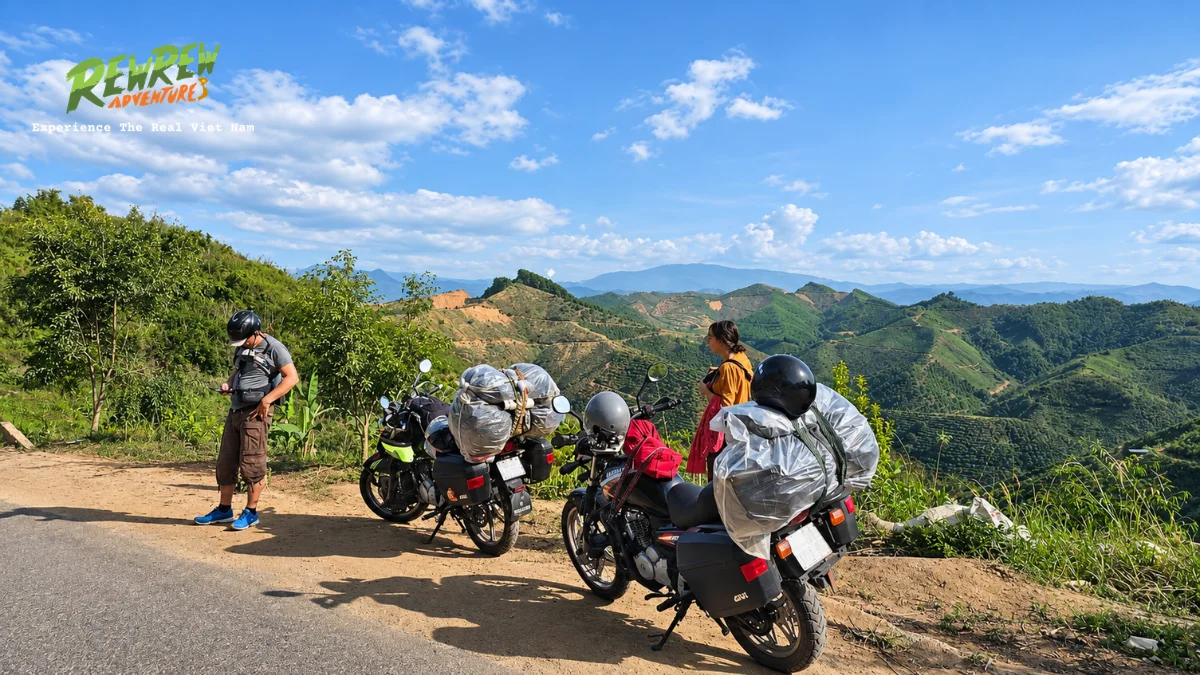
Licensed Easy Rider guides furnish passengers with heavy-duty two-piece waterproof rain suits consisting of sealed hooded jackets, elasticized trousers, and plastic boot protectors. These industrial-grade rain suits offer total protection against wind-driven precipitation at highway speeds.
Travelers must avoid cheap disposable plastic ponchos sold at street corners. In highway wind turbulence, thin plastic ponchos billow uncontrollably like parachutes, obscuring the rider rearview mirrors, tearing to shreds within five minutes of riding, and posing an entanglement hazard with the rear wheel spokes and chain drive.
Airborne dust, exhaust particulate, and insects are common challenges on provincial highways. Guard your face and neck by packing two seamless microfiber neck gaiters or bandanas.
Pair these with UV400 polarized sunglasses to cut severe road glare and shield your eyes when riding with your helmet visor flipped open during low-speed village transits.
| Item Category | Essential Items to Pack | Helpful Extras |
|---|---|---|
| Travel Documents | Passport (valid 6+ months), printed Vietnam eVisa, travel insurance certificate | Laminated emergency contact card, crisp Vietnamese Dong cash |
| Electronics | Smartphone, 20,000mAh power bank, USB cables, camera with extra battery | Compact multi-port USB wall charger, universal socket adapter |
| Personal Care | SPF50+ broad spectrum sunscreen, lip balm with UV filter, DEET insect repellent | Rehydration oral electrolyte salts, personal prescription medications |
| Hygiene Kit | Biodegradable wet wipes, travel tissues, pocket hand sanitizer | Quick-dry compact microfiber towel, travel toothbrush kit |
Electronics management, power banks, and data security
Documenting your journey across Vietnam requires thoughtful electronic battery management, especially when staying in remote rural villages. While boutique hotels in major towns provide standard electrical outlets, rural stilt house homestays in ethnic minority communities often feature limited electrical sockets in communal sleeping quarters.
Always carry a robust external power bank with a capacity between 10,000mAh and 20,000mAh inside your personal daypack. This allows you to recharge smartphones, cameras, and navigation trackers throughout seven-hour scenic days on the road without waiting for evening stops.
Verify that your power bank complies with international airline carry-on regulations, which typically restrict battery capacities to under 100 watt-hours (roughly 27,000mAh).
Protect valuable digital cameras, lenses, and laptops by storing them inside individual padded zip-top cases lined with waterproof silicone membranes. Stash silicone gel desiccant packs inside your camera bag to absorb ambient tropical humidity and prevent internal lens fogging when transitioning between air-conditioned bedrooms and warm outdoor jungle trails.
4 Step-by-step guide to packing your luggage for departure day
Step 1: Separate daily essentials into your personal daypack
Place your passport, wallet, daily cash, smartphone, power bank, sunglasses, sunscreen, rain jacket, and prescription medicines into your 15-liter daypack. This bag remains on your lap or shoulders, ensuring you never need to untie the rear rack luggage during quick photography stops or roadside fruit breaks.
Step 2: Waterproof the interior of your main travel pack
Line the interior compartment of your primary backpack with a durable 30-liter dry bag or heavy-duty plastic garbage liner before packing garments.
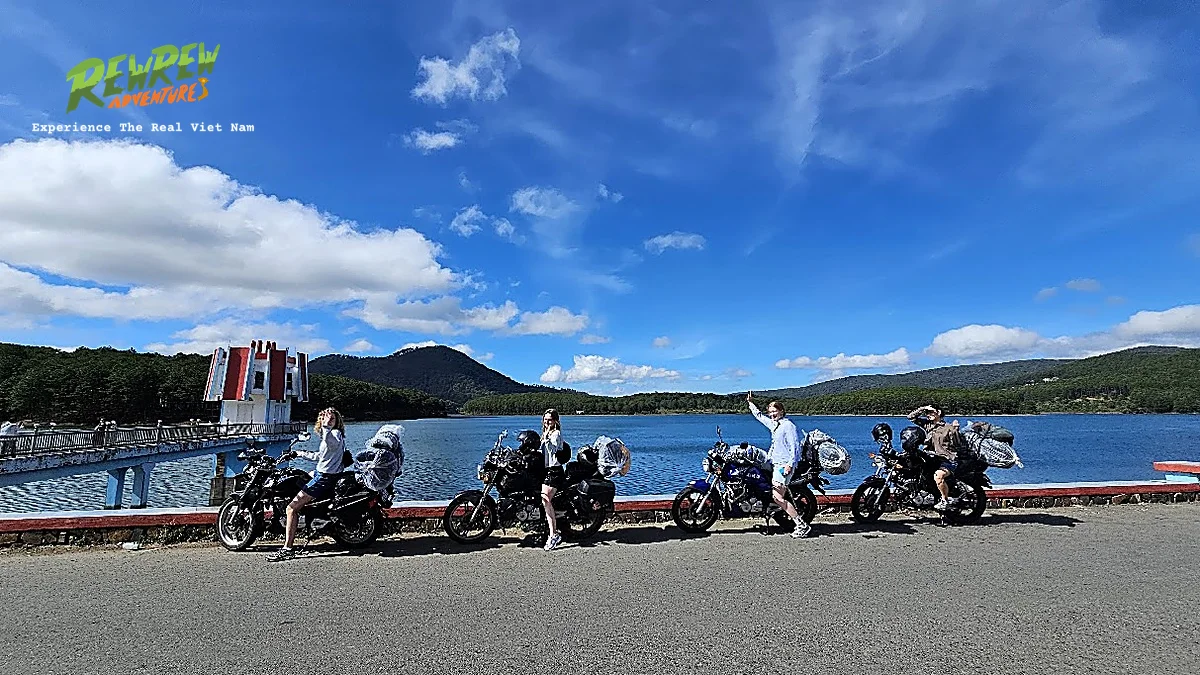
While professional guides encase your entire pack in thick vinyl covers before strapping it down, an internal waterproof barrier guarantees that your clothing stays dry even during severe tropical thunderstorms.
Step 3: Roll garments tightly and utilize compression packing cubes
Roll your shirts, trousers, and undergarments into tight cylindrical bundles to maximize interior pack volume and reduce fabric wrinkling. Group similar garments inside zippered mesh packing cubes so you can pull out evening clothing at your guesthouse without disrupting the rest of your organized gear.
Step 4: Verify that all exterior straps and cords are tied down
When presenting your bag for motorcycle mounting, tuck away all loose backpack shoulder straps, hip belt wings, and hanging compression cords. Dangling cords can whip in highway turbulence and catch in the motorcycle rear wheel spokes, drive chain, or brake calipers, presenting a severe safety hazard.
Frequently asked questions
Can I bring a large hard-shell suitcase on an Easy Rider tour?
No, large hard-shell suitcases exceeding 26 inches cannot be mounted securely on a motorcycle rear luggage rack. Rigid suitcases slide on metal rails, increase wind resistance, and strain the bike suspension. Travelers should pack soft-sided backpacks, duffel bags, or carry-on wheeled bags under 65 liters.
What luggage delivery options exist for one-way tours between cities?
For one-way expeditions from Da Lat to Nha Trang, Hoi An, or Ho Chi Minh City, licensed tour operators coordinate secure point-to-point luggage transfer via intercity passenger courier buses. Your oversized suitcases are tagged, placed on express courier transit, and delivered directly to your destination hotel reception while you ride unencumbered.
Are laundry facilities available on multi-day motorcycle journeys?
Yes, reliable laundry services are widely available at hotels and guesthouses throughout rural Vietnam. Staff wash, dry, and fold clothes within 12 hours for approximately $1 to $2 per kilogram. Packing four to five days of clothing is more than sufficient even for a two-week cross-country overland journey.
Do I need to bring my own motorcycle helmet on the tour?
No, professional tour companies provide sanitized, high-quality three-quarter or full-face helmets certified to Vietnamese CR and international DOT safety standards. However, travelers with uncommon head dimensions or those who prefer personal equipment are welcome to bring their own full-face touring helmets.
What does the tour operator provide for me?
Typically, the cost of an “Easy Rider” tour includes all essential safety gear:
- A standard-compliant helmet.
- Protective gear for your arms and legs (armor/pads).
- A high-quality raincoat (either a two-piece suit or a sturdy poncho).
- A waterproof cover for any backpacks carried on the back of the bike.
However, it is recommended that you bring your own sunscreen, insect repellent, and a basic medical kit (containing items such as stomach relief medication, cold/fever medicine, and adhesive bandages) for use whenever needed.