Exploring Vietnam by motorcycle offers unparalleled travel freedom, but the dynamic nature of local traffic and mountainous terrain demands rigorous risk management. Traffic patterns across Southeast Asia differ fundamentally from Western roadways, presenting unpredictable pedestrian movements, high scooter density, and shifting road surface conditions.
Underestimating insurance requirements remains one of the costliest oversights among foreign travelers. Many overseas visitors assume their standard holiday insurance automatically covers two-wheeled travel. In reality, underwriters reject an estimated ninety percent of motorcycle-related claims due to policy exclusions, invalid driver licensing, or unlicensed carriage.
Quick Summary: Motorbike Travel Insurance Essentials
- Mandatory Licensing Rule: Insurers require a valid motorcycle license from your home country paired with a 1968 Vienna Convention IDP.
- Unrecognized Permits: The 1949 Geneva Convention IDP (held by citizens of the USA, Canada, and Australia) is not legally recognized under Vietnamese law.
- Engine Displacement Thresholds: Riding motorbikes over 50cc without an appropriate license immediately invalidates medical injury coverage.
- The Pillion Advantage: Riding as a passenger with a licensed tour operator like Rew Rew Adventures is covered under standard travel medical insurance.
- Strict Policy Exclusions: Any detectable blood alcohol level, riding without an approved helmet, or participating in unorganized races voids all claims.
How Travel Insurance Applies to Motorbike Accidents in Vietnam
Travel insurance functions as an indemnity contract that reimburses policyholders for unforeseen medical costs, emergency medical transport, and third-party liabilities. In severe road accidents, hospital treatment expenses at international clinics in Hanoi or Ho Chi Minh City can quickly exceed $10,000 USD, while medical air evacuation to Bangkok or Singapore costs upwards of $50,000 USD.
For an insurer to accept financial liability for an accident, the policyholder must have been operating within the strict boundaries of local law. If a traveler breaks host-nation traffic regulations, underwriters classify the incident as an illegal act, which triggers an automatic exclusion clause.

Policies also distinguish sharply between personal medical expenses and third-party property damage. Most travel insurance packages focus purely on the policyholder’s bodily injury and medical repatriation. They rarely provide comprehensive collision coverage for damage caused to rental motorcycles or third-party vehicles, meaning riders remain personally liable for bike repair costs.
Legal License Requirements and the 1968 Vienna Convention
The primary reason insurance claims fail in Vietnam centers on driver licensing technicalities. Under the Law on Road Traffic, foreign travelers operating a two-wheeled motorized vehicle with an engine displacement exceeding 50cc must hold an official International Driving Permit (IDP).
Crucially, Vietnam is a signatory only to the 1968 Vienna Convention on Road Traffic. The Ministry of Transport recognizes IDP documents issued under the 1968 Convention containing an explicit category A (motorcycle) endorsement.
Travelers from countries that did not sign the 1968 Convention, including the United States, Australia, and Canada, typically hold IDPs issued under the 1949 Geneva Convention. Vietnamese traffic police and domestic courts do not recognize 1949 Geneva permits as valid driving licenses.
If a traveler holding an unrecognized permit crashes a motorcycle, insurance adjusters verify with local police authorities whether the driver was legally licensed. Upon discovering the licensing deficiency, insurers decline all hospital bill payouts, leaving the traveler entirely responsible for private medical debt.
Riding Pillion on an Easy Rider Tour versus Self-Driving
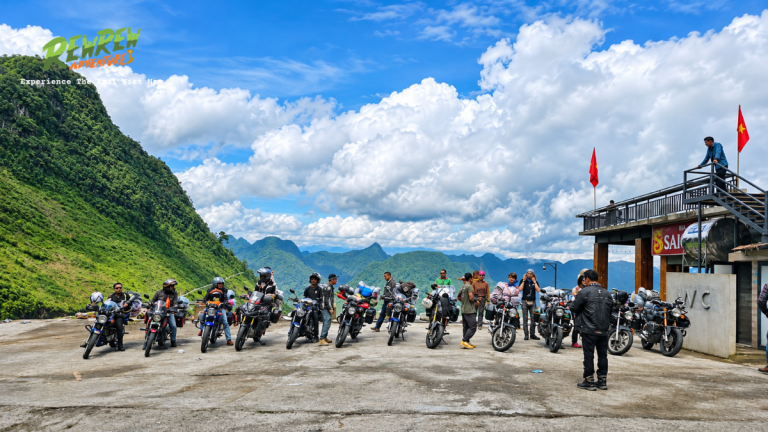
Given legal licensing complexities, many overseas visitors elect to travel as pillion passengers rather than operating motorbikes independently. This travel style fundamentally alters how insurance underwriters assess personal liability and accident claims.
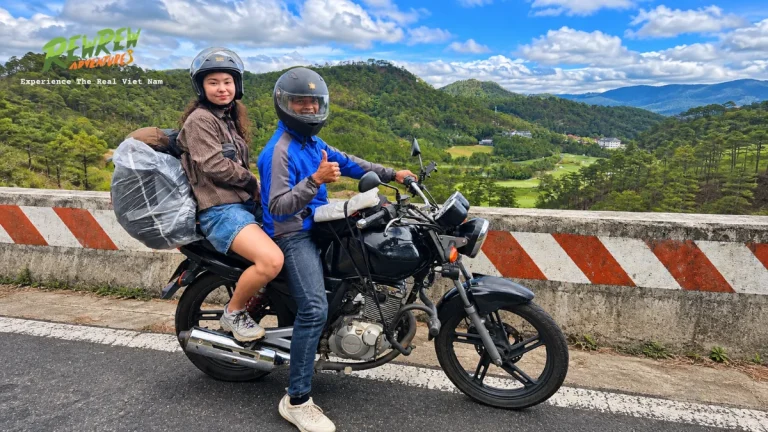
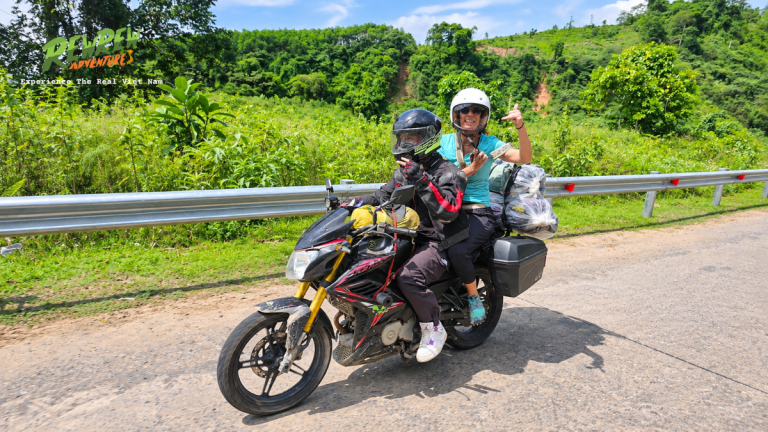
When riding pillion behind a professional guide from a licensed tour company such as Rew Rew Adventures (License 68-0050/2024/CDLQGVN-GP LHQT), the traveler functions legally as a passenger. You do not operate the motorized machinery, meaning you do not need an international motorcycle license or local driving permit.
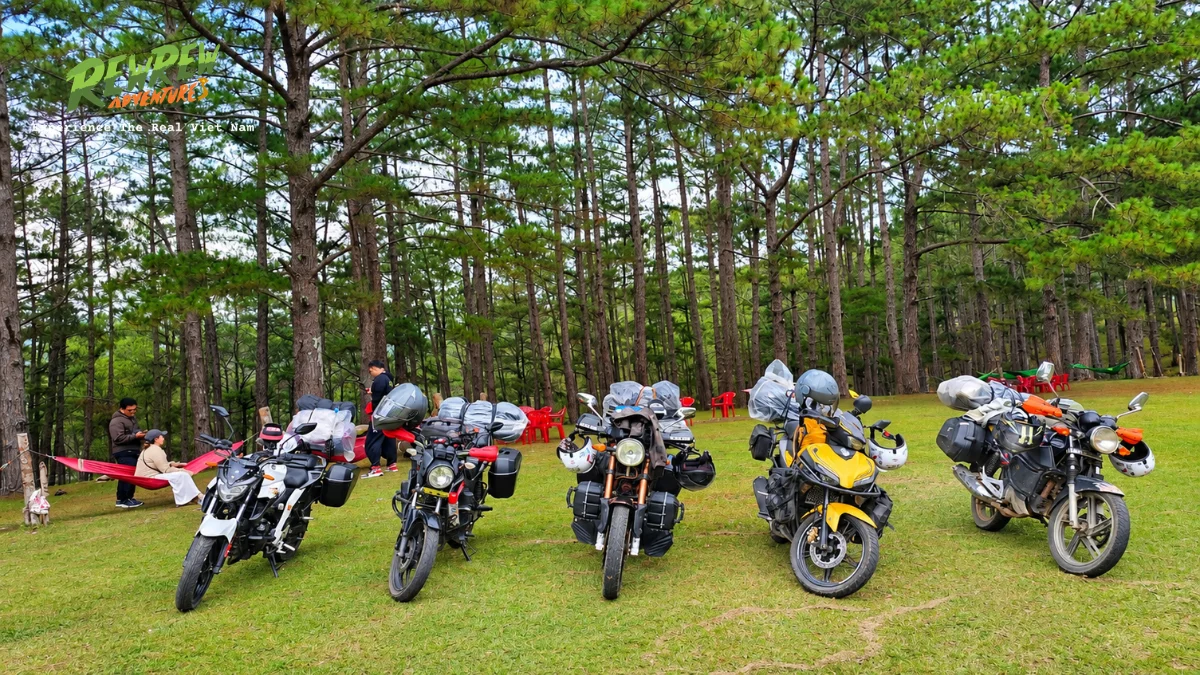
Standard international travel insurance policies cover passenger transit on public or commercial passenger conveyances. If an accident occurs while riding pillion, insurers process emergency medical expenses under standard emergency medical provisions, provided the operator holds valid commercial tourism licensing and the passenger wore a certified protective helmet.
Furthermore, reputable tour operators maintain mandatory domestic passenger liability insurance. This creates an additional layer of financial protection that independent scooter rentals from roadside shops never offer.
Common Policy Exclusions That Void Your Insurance Claim
Insurance underwriters maintain exhaustive lists of operational exclusions that absolve them of reimbursement duties. Policyholders should review fine-print clauses before embarking on mountain journeys.
- Detectable Blood Alcohol Levels: Vietnam enforces a strict zero-tolerance policy regarding alcohol consumption while operating motorized vehicles (Decree 100/2019/ND-CP). Any detectable trace of alcohol on a hospital blood test or police breathalyzer results in immediate claim rejection.
- Non-Compliant Protective Headgear: Insurers mandate the use of certified safety helmets. Wearing novelty plastic shells or unstrapped bicycle helmets breaches policy duty-of-care clauses, directly voiding head-injury claims.
- Engine Displacement Limitations: Budget travel policies often cap motorcycle coverage at 50cc or 125cc. Operating dual-sport adventure bikes (such as 250cc or 500cc models) without specific high-displacement endorsements forfeits coverage.
- Off-Road and Unsanctioned Trails: Policies commonly exclude damage occurring on unregistered forest trails, cross-country sand dunes, or military zones closed to public traffic.
Comparison of Top International Travel Insurers for Vietnam
Selecting an insurer requires careful alignment between policy wording and intended overland activities. The matrix below highlights key coverage differences across established global providers.
| Insurance Underwriter | Motorbike Riding Rider Add-On | Engine Size Limit | Recognized Licensing Mandate | Pillion Passenger Coverage |
|---|---|---|---|---|
| World Nomads (Standard) | Optional Explorer Tier | Up to 125cc (Explorer up to 250cc+) | Home license + Legal IDP | Covered under standard terms |
| SafetyWing (Nomad Insurance) | Included in core policy | Any size (if legally licensed) | Valid home license + Legal IDP | Covered as passenger |
| Allianz Global Assistance | Requires Adventure Pack | Policy dependent | Strict adherence to local laws | Covered with licensed driver |
| LUMA Travel Insurance | Specific Motorbike Endorsement | Tiered options available | Valid IDP and local compliance | Fully covered as passenger |
Travelers must verify whether their home country motorcycle license explicitly covers the displacement tier they intend to rent abroad. If a traveler only holds a car license at home, the IDP will not validate two-wheeled motorcycle operation.
5 Practical Steps for Insurance Claim Protocols
In the event of an on-road incident, following a disciplined administrative sequence preserves your ability to submit a successful insurance reimbursement claim.
Step 1: Obtain immediate emergency medical attention at the nearest certified hospital or international clinic, prioritizing physical stabilization.
Step 2: Contact your insurance emergency assistance hotline within twenty-four hours of hospital admission to initiate an official claim file and obtain pre-authorization for medical procedures.
Step 3: Secure an official police accident report from local traffic authorities, documenting the location, vehicles involved, and incident context.
Step 4: Request comprehensive medical documentation from attending physicians, including hospital intake records, clinical diagnosis summaries, surgical reports, and original pharmacy receipts stamped with official clinic seals.
Step 5: Collect written confirmation from your tour operator or vehicle owner establishing legal licensing, vehicle ownership papers, and roadworthiness documentation.
Frequently Asked Questions About Motorbike Travel Insurance
Does travel insurance cover damage to the rented motorcycle?
Standard travel insurance policies cover personal bodily injury and emergency medical evacuation. They almost never cover collision damage or theft of the rental motorcycle. Riders must negotiate damage liability caps directly with the rental shop or tour operator.
Can travelers buy local motorcycle insurance in Vietnam?
Foreigners can purchase basic third-party civil liability insurance (Bao Hiem Bat Buoc) for nominal fees at domestic post offices and petrol stations. However, this coverage pays limited compensation to injured third parties and offers no personal medical coverage for overseas travelers.
What should travelers do if involved in an accident in a remote area?
If injured in a remote highland district, travelers should utilize their insurer’s 24/7 global emergency assistance service to coordinate emergency ambulance transfer to a provincial hospital or an international medical center in Da Nang, Hanoi, or Ho Chi Minh City.
Does health insurance cover pillion passengers if the guide is at fault?
Yes. If you ride pillion behind a licensed guide and an accident occurs, your travel health insurance covers your medical treatment. In addition, the licensed tour operator’s commercial carrier insurance provides primary or supplementary liability compensation.