Vietnamese cuisine is universally celebrated as one of the world’s most sophisticated and balanced culinary traditions. Governed by the ancient philosophical harmony of the five natural elements, every authentic Vietnamese dish strikes an exquisite balance between sweet, sour, salty, bitter, and spicy notes.
Across the country’s three geographic regions, dining takes on distinct personalities: the subtle, clear broths of the North; the fiery, complex spices of the imperial Central coast; and the sweet, abundant herb-laden creations of the South and Central Highlands.
If you are planning an epic gastronomic adventure through Vietnam, here is the definitive top list of the 15 must-try Vietnamese dishes you simply cannot miss, complete with flavor mechanics, street food pricing, and dining tips.
Quick Check: Top 15 Must-Try Vietnamese Dishes
- Top 3 Global Icons: Pho Bo (slow-simmered beef noodle soup), Banh Mi (crispy savory baguette), and Bun Cha (charcoal grilled pork noodles).
- Central Imperial Gems: Bun Bo Hue (spicy lemongrass beef soup), Cao Lau (smoky ash-water noodles), and Mi Quang (turmeric broth noodles).
- Southern & Highland Stars: Com Tam (Saigon broken rice), Banh Xeo (sizzling crepe), Lau Ga La E (lemon basil hotpot), and Kem Bo (avocado ice cream).
- Street Food Price Range: Typical street meals cost between $0.80 and $3.00 USD, while communal hotpots range from $8.00 to $14.00 USD.
- How to Eat: Always personalize your bowl using the complimentary fresh herbs, lime wedges, garlic vinegar, and roasted chili sauce on your table.
Overview of Vietnamese Culinary Philosophy and Regional Flavors
To understand why Vietnamese gastronomy captures international acclaim, one must look at how geography, climate, and ancient philosophy shape each regional specialty.
In Northern Vietnam, centered on the ancient capital of Hanoi, cooler winters and deep historical traditions produce dishes characterized by subtle restraint, pristine broth clarity, and delicate seasonings.
Northern cooks rely on ginger, scallions, black pepper, and premium fish sauce to highlight the natural flavors of primary meats and river fish.
In Central Vietnam, the former imperial capital of Hue and coastal trading ports fostered a culinary culture defined by fiery heat, bold color, and intricate presentation.
Central food prominently features fermented shrimp pastes (Mam Ruoc), copious fresh red chilies, crushed lemongrass, and small ceremonial share plates inspired by royal banquet traditions.
In Southern Vietnam and the lush Mekong Delta, year-round tropical sunshine yields agricultural abundance. Southern cooking embraces sweetness through fresh coconut water and palm sugar, accompanied by massive baskets of wild herbs, raw bean sprouts, and fragrant dipping sauces.
In the temperate Central Highlands around Da Lat, this abundance extends to fresh alpine artichokes, wild mushrooms, crisp greens, and rich avocados.
Comprehensive Comparison Table of the Top 15 Vietnamese Dishes
The comparison table below details all 15 essential dishes, their regional origin, key flavor dynamics, and typical street food price range in USD.
| Rank & Dish Name | Regional Origin | Signature Flavor Profile | Estimated Price (USD) | Recommended Meal Time |
|---|---|---|---|---|
| 1. Pho Bo | Northern Vietnam / Hanoi | Clear bone marrow broth, star anise, cinnamon, tender beef | $1.50 – $2.50 USD | Breakfast |
| 2. Banh Mi | Nationwide / Saigon Style | Crispy warm crust, rich liver pate, pickled daikon, herbs | $0.80 – $1.50 USD | Any Time |
| 3. Bun Cha | Hanoi & Northern Delta | Smoky charcoal pork patties, sweet-savory fish sauce dip | $1.80 – $2.50 USD | Lunch |
| 4. Bun Bo Hue | Hue & Central Coast | Fiery chili oil, aromatic lemongrass, rich beef shank broth | $1.60 – $2.80 USD | Breakfast & Lunch |
| 5. Cao Lau | Hoi An Ancient Town | Chewy ash-water noodles, five-spice pork, crispy croutons | $1.40 – $2.20 USD | Lunch & Dinner |
| 6. Mi Quang | Quang Nam Province | Turmeric noodles, savory concentrated broth, rice crackers | $1.40 – $2.20 USD | Breakfast & Lunch |
| 7. Banh Xeo | Central & Southern Plains | Crispy turmeric rice crepe, shrimp, pork, fresh herb wrap | $1.50 – $3.00 USD | Dinner |
| 8. Com Tam | Ho Chi Minh City | Charred marinated pork chop, broken rice, steamed meatloaf | $1.80 – $3.00 USD | Breakfast & Lunch |
| 9. Cha Ca La Vong | Hanoi | Pan-fried catfish with fresh dill, turmeric, shrimp paste | $5.00 – $8.00 USD | Lunch & Dinner |
| 10. Goi Cuon | Southern Vietnam | Fresh rice paper rolls, boiled shrimp, pork, peanut dip | $1.20 – $2.00 USD | Afternoon Snack |
| 11. Banh Cuon | Northern Vietnam | Paper-thin steamed rice crepes, minced pork, fried shallots | $1.20 – $1.80 USD | Breakfast |
| 12. Nem Nuong | Central & Southern Towns | Grilled garlic pork sausages, pickled vegetables, warm dip | $1.80 – $3.00 USD | Lunch & Dinner |
| 13. Lau Ga La E | Central Highlands / Dalat | Chicken simmered with wild peppery lemon basil leaves | $8.00 – $14.00 USD (pot) | Dinner |
| 14. Hu Tieu Nam Vang | Mekong Delta & Saigon | Pork bone broth, minced meat, quail eggs, Chinese celery | $1.60 – $2.50 USD | Breakfast & Dinner |
| 15. Kem Bo | Dalat & Central Highlands | Whipped ripe avocado puree topped with coconut milk ice cream | $0.80 – $1.40 USD | Dessert |
*Note: The prices and rates listed above are for reference only and subject to seasonal updates or provider adjustments.*
Detailed Guide to the Top 15 Must-Try Vietnamese Dishes
1. Pho Bo
Widely recognized as Vietnam’s undisputed national culinary ambassador, Pho originated in Nam Dinh province and Hanoi during the early 20th century.
The heart of authentic Northern Pho lies in its broth, slow-simmered for twelve to eighteen hours with roasted beef marrow bones, charred ginger, yellow onions, star anise, black cardamom pods, and cinnamon sticks.
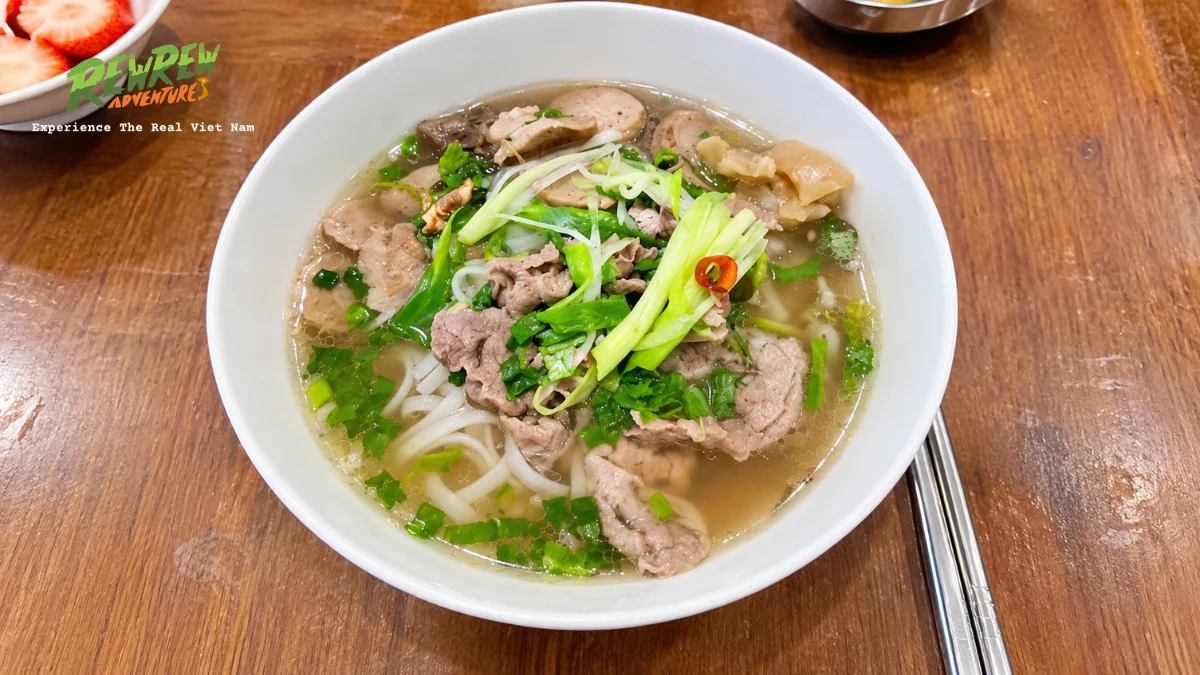
Unlike southern iterations that incorporate sweet bean sauce and raw bean sprouts, a traditional Hanoi bowl of Pho Bo is celebrated for its pristine purity. Tender ribbons of fresh flat rice noodles (Banh Pho) rest beneath thinly sliced rare beef (Tai) or well-done brisket (Chin), garnished generously with finely chopped scallions and Chinese coriander.
A squeeze of fresh lime juice and a dash of pickled garlic vinegar are all that is required to awaken the broth’s deep savory complexity.
2. Banh Mi
The Vietnamese Banh Mi represents one of the world’s most brilliant examples of culinary cross-pollination.
French colonists introduced baguettes, liver pate, and mayonnaise in the 19th century, but Vietnamese street vendors transformed the sandwich by adding rice flour to the dough for an ultra-light, crackling crust, and stuffing the interior with bold local ingredients.
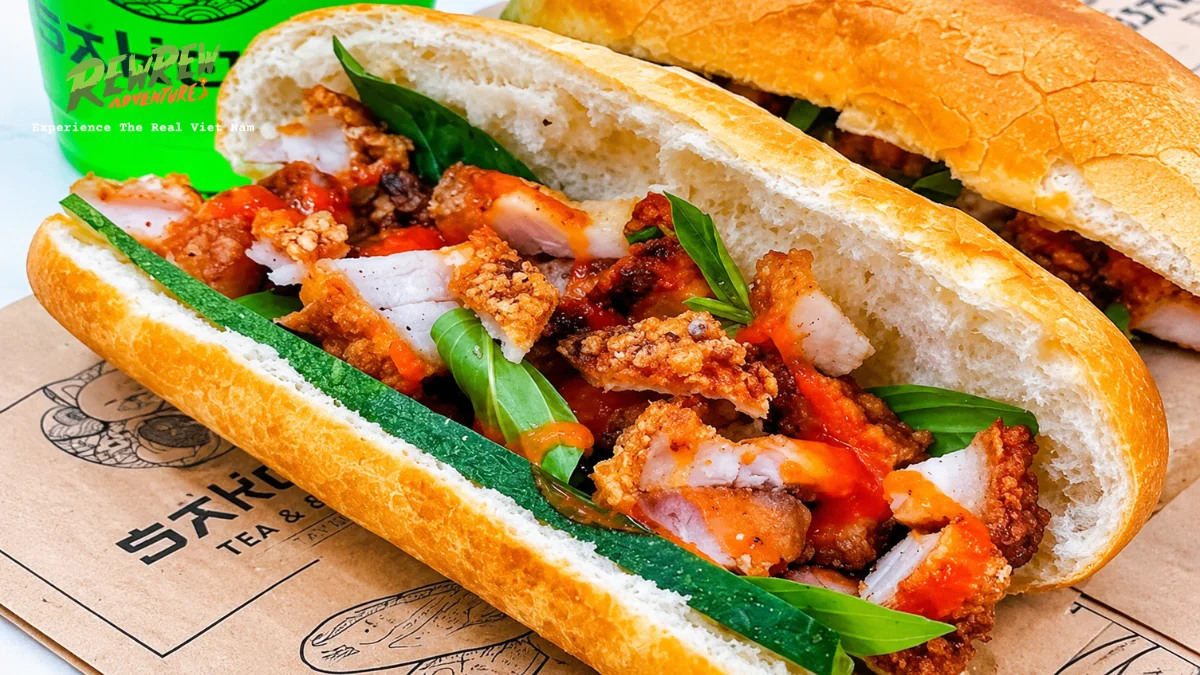
A classic Saigon Banh Mi Thit features a generous smear of rich pork liver pate and homemade egg yolk mayonnaise, layered with assorted pork charcuterie, cucumber batons, cilantro sprigs, fiery chili slices, and tangy pickled daikon and carrots.
The balance of crispy, creamy, savory, herbaceous, and spicy textures makes every single bite memorable.
3. Bun Cha
Elevated to global fame when Anthony Bourdain shared a meal with President Barack Obama in Hanoi, Bun Cha is the quintessential lunchtime indulgence of the Northern capital.
The dish features two styles of pork: thinly sliced pork belly and seasoned minced pork patties, both marinated in caramel water, shallots, and fish sauce before being grilled over glowing charcoal braziers.
The charred meat is submerged in a warm bowl of dipping broth made from diluted fish sauce, rice vinegar, sugar, garlic, chili, and crunchy slices of green papaya. Diners dip bundles of cold rice vermicelli noodles and fresh herbs directly into the bowl for a smoky, sweet, and savory explosion of flavors.
4. Bun Bo Hue
Originating in the royal capital of Hue, Bun Bo Hue is a muscular, intensely aromatic noodle soup that stands in fiery contrast to Hanoi’s understated Pho.
Its broth is built upon simmered beef shanks and pork trotters heavily infused with bruised lemongrass stalks and fermented shrimp paste (Mam Ruoc).
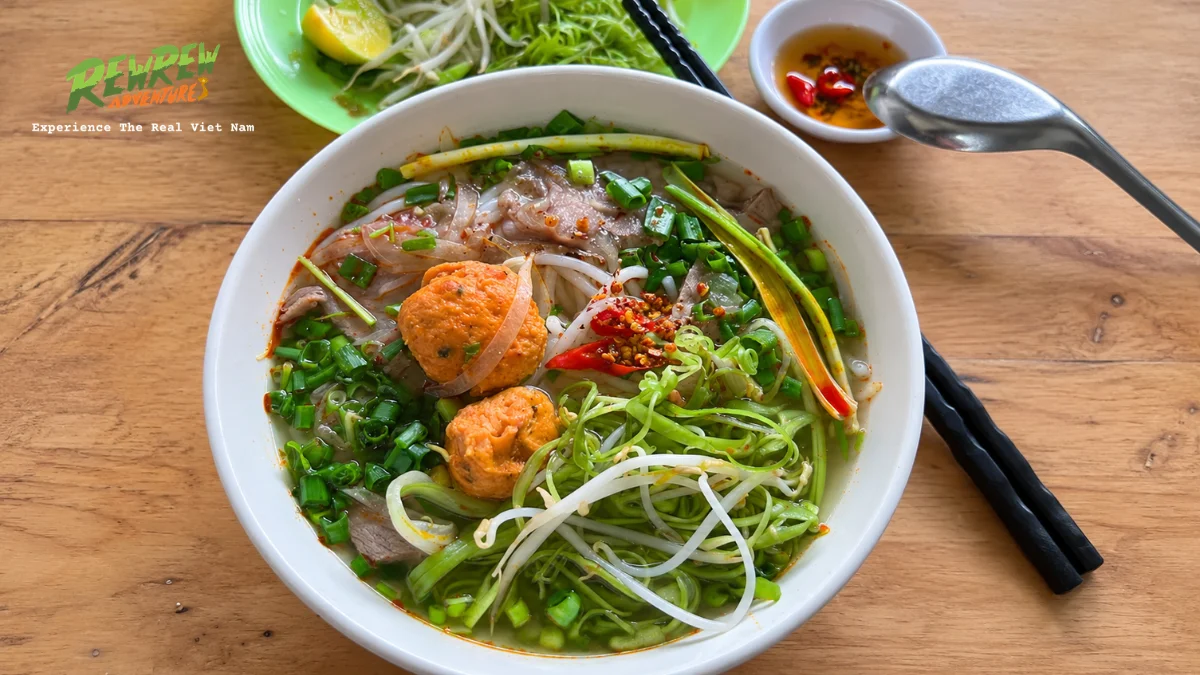
A fragrant chili oil paste is stirred in, imparting a glowing crimson hue and deep lingering heat. The bowl features thick, cylindrical rice noodles, tender beef shank slices, steamed pork patties, and cubes of congealed blood pudding.
A mountain of shredded banana blossoms, mint leaves, and lime wedges accompanies every bowl to balance the soup’s bold, rich intensity.
5. Cao Lau
Cao Lau is an exclusive heritage dish that can truly only be made in the UNESCO-listed ancient port of Hoi An.
According to local lore, the chewy, yellow-tinted noodles must be kneaded using alkaline water drawn from the ancient thousand-year-old Ba Le well and mixed with ash wood burned from Cham Island trees.
The noodles are topped with thinly sliced char siu pork braised in five-spice powder, blanched bean sprouts, fresh local herbs, and crispy deep-fried square croutons made from dried noodle dough.
Rather than a full bowl of broth, Cao Lau is dressed with just a few spoonfuls of rich, concentrated pork pan juices, producing an earthy, smoky, and textural masterpiece.
6. Mi Quang
Mi Quang is the culinary pride of Central Vietnam’s Quang Nam province. Flat rice noodles infused with bright yellow turmeric are placed in a wide ceramic bowl over a bed of crisp greens, mustard leaves, and banana flowers.
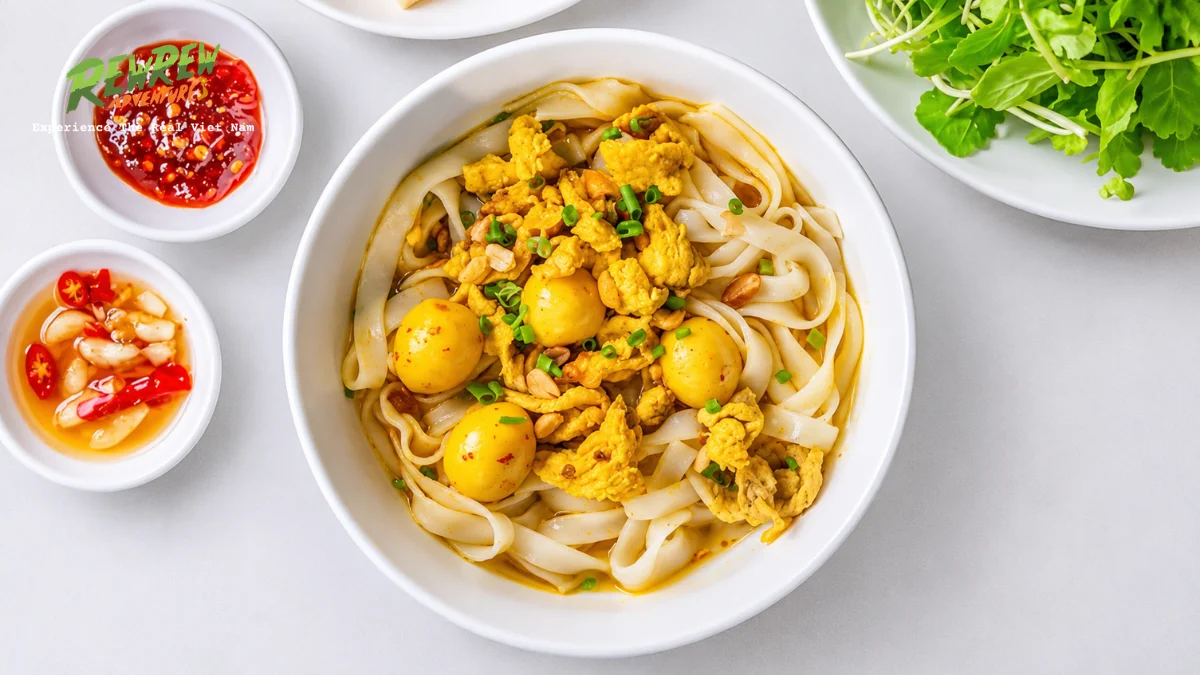
A small ladle of deeply concentrated, savory broth simmered with pork, chicken, or shrimp is spooned over the noodles, ensuring they remain lightly coated rather than submerged.
The dish is finished with boiled quail eggs, roasted peanuts, and sheets of toasted sesame rice crackers (Banh Da) that diners crush into the bowl for added crunch.
7. Banh Xeo
Named after the loud sizzling sound (xeo) the batter makes when poured into a scorching cast-iron skillet, Banh Xeo is an interactive dining feast. The vibrant yellow batter is made from rice flour, coconut milk, and turmeric, filled with sweet pork belly, small whole prawns, onions, and crisp bean sprouts.
Diners tear off pieces of the shattering, golden crepe, wrap them inside large mustard green or lettuce leaves along with fresh mint and perilla, and dip the parcel into garlic chili fish sauce (Nuoc Cham).
The combination of hot, crispy batter and cool, peppery raw leaves exemplifies Vietnamese texture contrast.
8. Com Tam
Born out of thrift among Mekong Delta rice farmers who consumed cracked grains damaged during the milling process, Com Tam (broken rice) has risen to become the defining street comfort food of Ho Chi Minh City.
The miniature rice grains have a unique, fluffy, couscous-like texture that absorbs juices beautifully. A classic serving (Com Tam Suon Bi Cha) is headlined by a thin pork chop marinated in sweet soy sauce, garlic, and lemongrass, grilled over smoky coals until caramelized.
It is accompanied by shredded pork skin tossed in toasted rice powder (Bi), a steamed egg and pork meatloaf slice (Cha Trung), scallion oil, pickled vegetables, and a small bowl of sweet fish sauce.
9. Cha Ca La Vong
Dating back to the 19th century when the Doan family served it to anti-colonial resistance fighters, Cha Ca is a historic Hanoi culinary institution.
Chunks of firm freshwater fish, traditionally hemibagrus catfish, are marinated in fresh turmeric, galangal, fermented rice paste, and fish sauce.
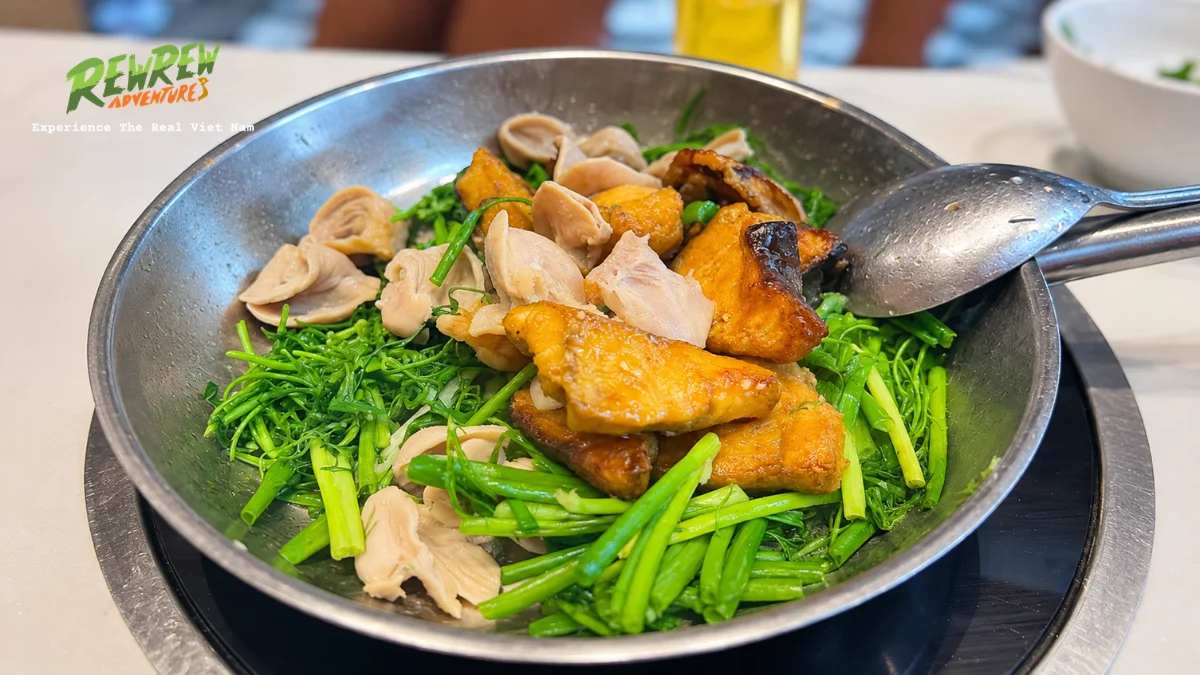
At the table, guests fry the golden fish fillets in a sizzling tabletop skillet overflowing with mountains of fresh dill and scallions.
The aromatic fish is then transferred to bowls containing cold rice vermicelli, roasted peanuts, chili slices, and a dollop of pungent fermented shrimp paste (Mam Tom) whipped with lime juice until frothy.
10. Goi Cuon
Unlike deep-fried spring rolls, Southern Vietnamese Goi Cuon are celebrated for their pure, light freshness.
Translucent sheets of dry rice paper are briefly dipped in warm water until pliable, then wrapped around boiled pork tenderloin, pink poached shrimp, tender rice vermicelli, and crisp local lettuce and mint sprigs.
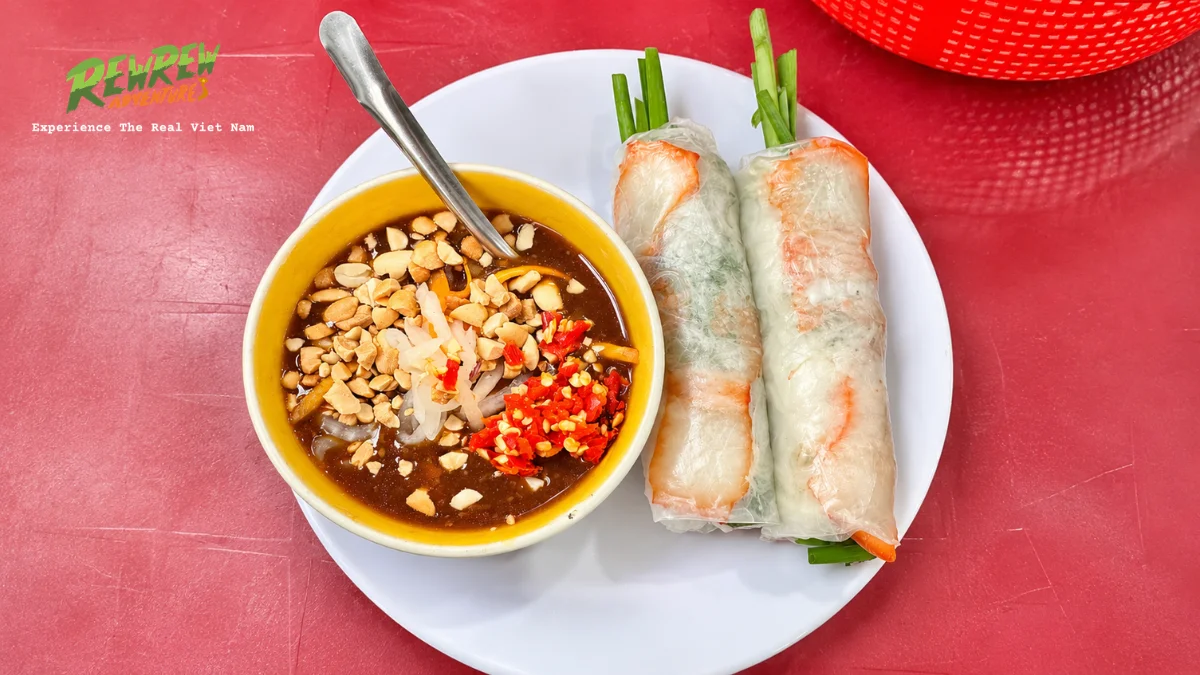
A delicate green chive stem protrudes from each roll like a signature flourish.
Goi Cuon are traditionally served alongside a rich, warm hoisin-peanut dipping sauce topped with crushed roasted peanuts and chili paste, creating a satisfying contrast between cool, crunchy herbs and creamy sauce.
11. Banh Cuon
Banh Cuon is a delicate morning staple prepared with exceptional manual skill. Fermented rice batter is poured in a paper-thin layer onto a taut cloth stretched over a steaming cauldron of boiling water.
Within seconds, the cook lifts the translucent rice crepe using a flat bamboo wand.
The crepe is filled with seasoned minced pork and finely diced wood-ear mushrooms, rolled tightly, and showered with golden fried shallots.
It is served warm alongside slices of steamed Vietnamese pork sausage (Cha Lua) and a gentle dipping bowl of mild, sweetened fish sauce broth.
12. Nem Nuong
Nem Nuong is a celebrated street specialty hailing from the coastal cities of Nha Trang and Ninh Hoa, as well as the Central Highlands.
Finely ground pork is seasoned with garlic, shallots, fish sauce, and a touch of sweetness, then molded onto bamboo skewers and grilled over charcoal embers until caramelized and fragrant.
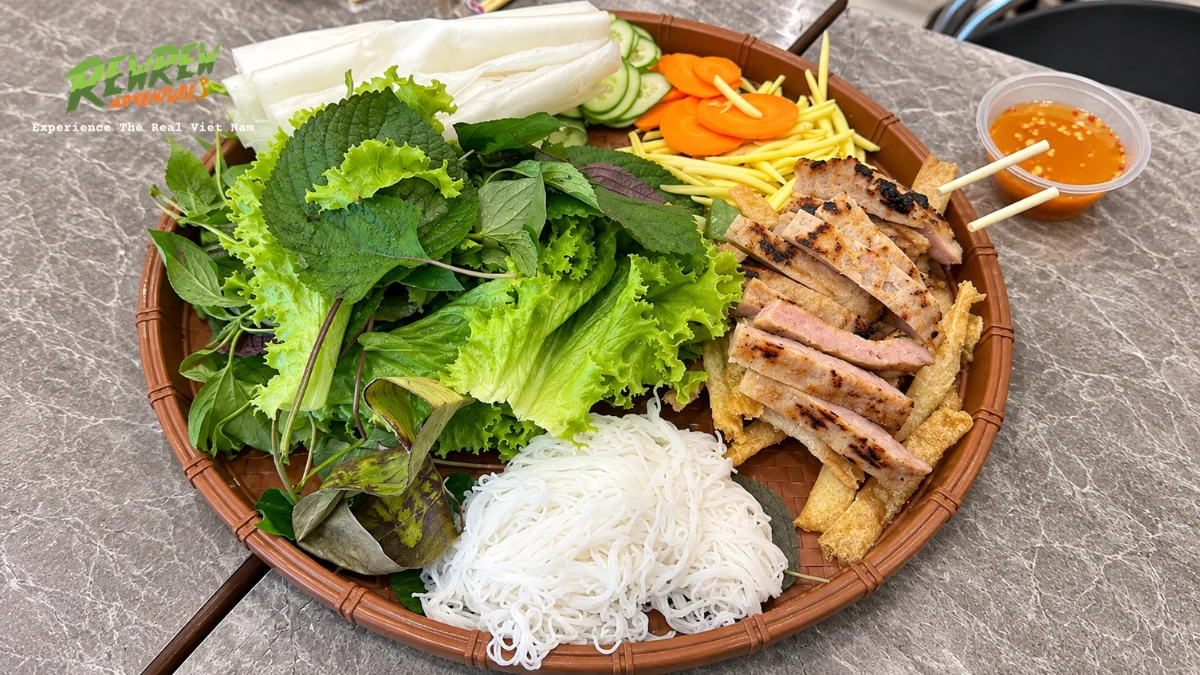
Guests wrap the sizzling pork sausages inside sheets of rice paper accompanied by crispy fried rice-paper rolls, green mango slices, cucumber batons, and fresh herbs.
The parcel is dipped into an extraordinary warm, thick sauce made from pork liver, glutinous rice, and ground soybeans.
13. Lau Ga La E
When the cool evening mountain fog rolls over Da Lat and the Central Highlands, locals flock to roadside hotpot houses for Lau Ga La E.
This comforting specialty features succulent free-range chicken simmered in a clear, peppery broth seasoned with crushed green chilies and crisp bamboo shoots.
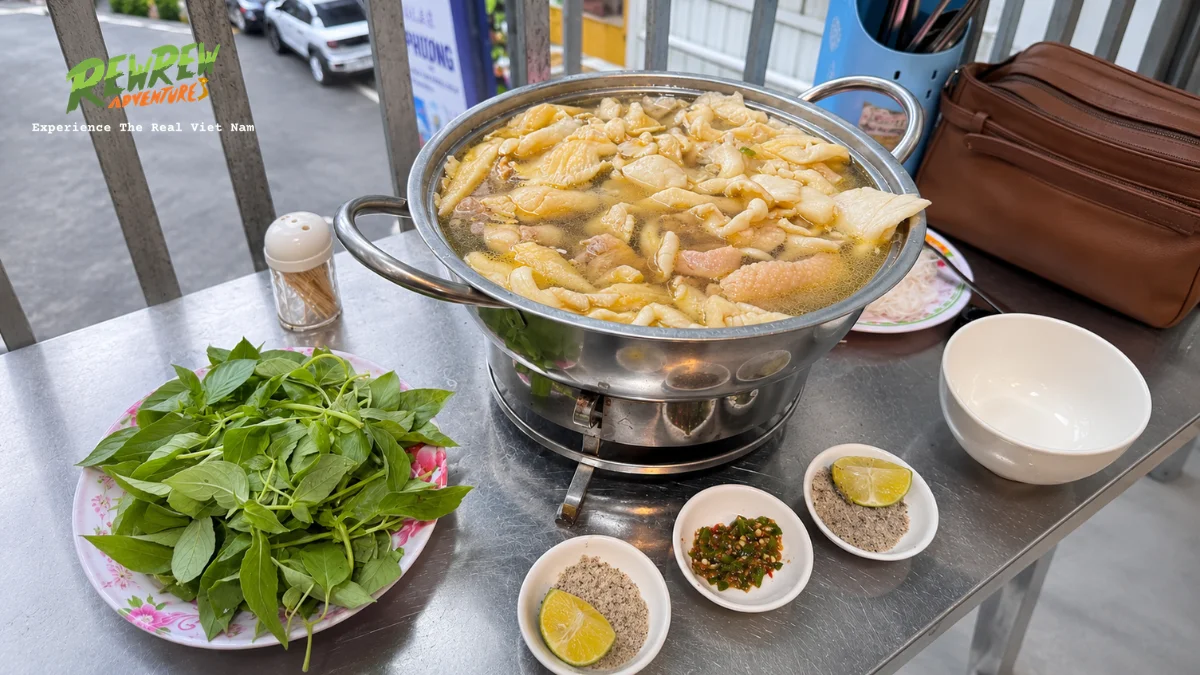
The defining highlight of the hotpot is overflowing baskets of fresh La E, an aromatic wild lemon basil native to the highland mountains.
Submerged into the bubbling soup for mere seconds, the leaves release a sharp, herbal fragrance that dispels the highland chill and complements the tender chicken perfectly.
14. Hu Tieu Nam Vang
Originating as a culinary fusion between Cambodian Phnom Penh soup and Southern Vietnamese market cooking, Hu Tieu Nam Vang is a beloved breakfast and late-night bowl across Ho Chi Minh City and the Mekong Delta.
The soup features a crystal-clear, slow-cooked pork bone and dried squid broth that delivers natural sweetness.
Served either in soup form (“Nuoc”) or dry (“Kho”) with sauce on the side, the chewy tapioca noodles are topped with minced pork, pork heart, succulent prawns, boiled quail eggs, and Chinese celery.
15. Kem Bo
Even during chilly highland evenings, travelers in Da Lat line up for Kem Bo, the city’s most famous street dessert. The fertile red basalt soil of Lam Dong province produces exceptional avocados with dense, buttery, golden flesh.
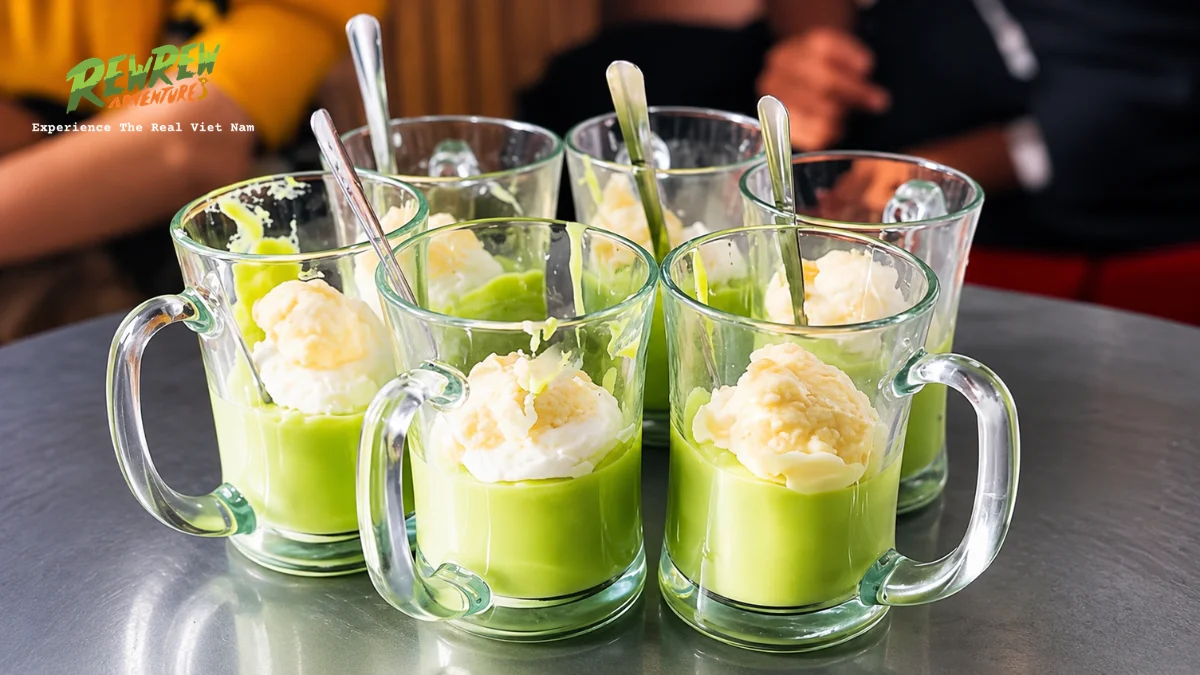
Highland dessert makers gently whip ripe avocado pulp with sweetened condensed milk until it transforms into an emerald-green mousse.
Crowned with a generous scoop of homemade coconut milk ice cream and toasted coconut shavings, this sweet highland treat provides an unforgettable balance of warm vegetal richness and icy sweetness.
Essential Dining Etiquette and Street Food Tips in Vietnam
Immersing yourself in Vietnamese street food culture is effortless when you follow standard local dining etiquette.
First, embrace communal sharing. At family-style meals or hotpot dinners, dishes are placed in the center of the table.
Always use the clean ends of chopsticks or communal spoons to transfer food to your personal rice bowl, rather than eating directly from shared platters.
Second, master the art of condiment tailoring. Street food vendors take great pride in their broth foundations, but they fully expect customers to customize each bowl.
Taste the broth first, then gradually add fresh herbs, lime juice, sliced chilies, or garlic vinegar to harmonize the flavors to your exact preference.
Third, dispose of napkins properly. In traditional street food stalls with stainless steel or plastic tables, trash cans are placed beneath each table.
Throwing crumpled napkins, lime rinds, or herb stems into the provided bins beneath your seat is standard local practice, keeping table surfaces clean for fresh dishes.
Frequently Asked Questions About Vietnamese Food
How do Northern Pho and Southern Pho differ?
Northern Pho features a cleaner, clearer broth seasoned primarily with star anise, cinnamon, ginger, and black pepper, served without herbs or bean sprouts and garnished simply with scallions.
Southern Pho features a sweeter, darker broth served with an abundant side plate of fresh Thai basil, culantro, mung bean sprouts, lime wedges, and dipping saucers of hoisin sauce and sriracha.
Is street food in Vietnam generally safe for international travelers?
Yes, street food in Vietnam is generally very safe, provided you follow basic traveler wisdom.
Choose busy stalls with rapid customer turnover, where fresh ingredients are cooked continuously at high temperatures right in front of you. Avoid raw, unpeeled vegetables at empty stalls, and drink bottled or purified water.
What is the proper way to eat fresh herbs and dipping sauces with noodle soups?
Tear fresh leafy herbs like mint, basil, and cilantro with your fingers and submerge them beneath the piping hot broth so their essential oils infuse the soup without wilting excessively.
For dipping meats, pour a splash of fish sauce, soy sauce, or chili sauce into the small side saucers provided at your table rather than dumping heavy sauces directly into your broth.
How can travelers communicate dietary restrictions like peanut or shellfish allergies?
Travelers with dietary restrictions should carry translated cards written in Vietnamese. For peanut allergies, state “Toi di ung voi dau phong” (I am allergic to peanuts).
For vegetarian or vegan food, ask for “Do an chay” (Buddhist vegetarian food), which guarantees no meat, seafood, or fish sauce additives.
Exploring Vietnam’s culinary wonderland on two wheels allows you to discover remote street vendors, fragrant regional markets, and hidden family kitchens that standard tours miss.
If you want to pair incredible street food tastings with breathtaking mountain panoramas, booking a guided Vietnam tour with Rew Rew Adventures guarantees an authentic gastronomic and road trip experience led by seasoned local experts.